
Steps to Follow After a Person’s Death in South Africa
The death of a loved one can be a profoundly challenging time, both emotionally and practically. In South Africa, there are specific legal and administrative steps that must be taken following a person’s death to ensure that their estate is managed appropriately and that any necessary legal obligations are fulfilled. Understanding these steps is crucial for executors, beneficiaries, and family members.
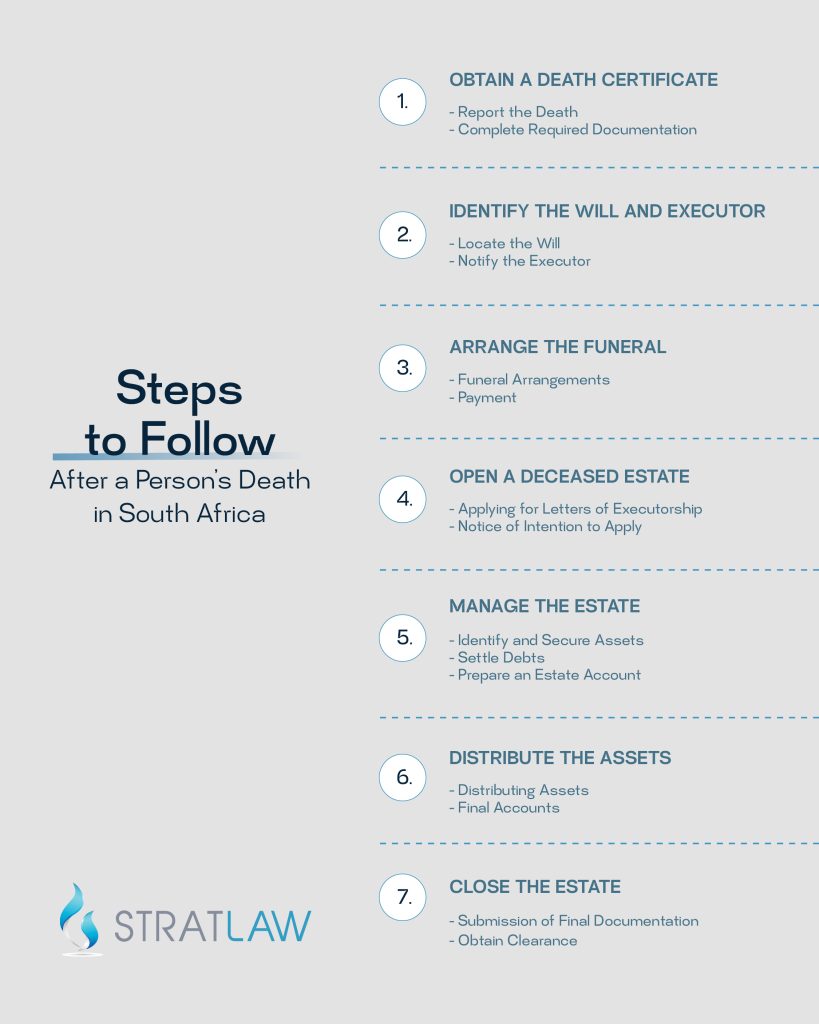
1. Obtain a Death Certificate
The first step following a death is to obtain an official death certificate. This document is essential for all subsequent processes. To acquire a death certificate, the following steps should be taken:
- Report the Death: The death must be reported to the Department of Home Affairs within 24 hours if it occurs in a hospital, or within 48 hours if it occurs at home.
- Complete Required Documentation: You will need to fill out a Notification of Death form (Form BI-1663) and provide the deceased’s ID and any relevant medical documents, such as a medical certificate of death.
2. Arrange the Funeral
While organizing a funeral is often one of the first practical steps taken, it is essential to do so sensitively and within the family’s means. Considerations include:
- Funeral Arrangements: Contact a funeral service provider to discuss arrangements, including burial or cremation.
- Payment: If the deceased had a funeral policy, the benefits may cover the costs. Otherwise, family members will need to coordinate funding.
3. Identify the Will and Executor
If the deceased left a will, it is important to locate it. The will typically outlines how the estate should be managed and who the executor is. The steps include:
- Locate the Will: Check for the will in the deceased’s personal belongings or with their attorney.
- Notify the Executor: The executor named in the will is responsible for administering the estate and must be informed promptly.
4. Open a Deceased Estate
If there is a will, the estate must be wound up according to its terms. If there is no will, the estate will be administered according to the Intestate Succession Act, 1987. Steps to follow include:
- Applying for Letters of Executorship: The executor must apply to the Master of the High Court for Letters of Executorship. This application includes submitting the will, a death certificate, and an inventory of the deceased’s assets.
- Notice of Intention to Apply: A notice must be published in a local newspaper, informing creditors of the estate and allowing them to claim debts.
5. Manage the Estate
Once appointed, the executor must take several steps to manage the estate, including:
- Identify and Secure Assets: Locate and secure all assets of the deceased, including property, bank accounts, investments, and personal belongings.
- Settle Debts: The executor must pay off any debts and obligations of the deceased before distributing the remaining assets.
- Prepare an Estate Account: An estate account detailing all transactions must be maintained, which will eventually be submitted to the Master of the High Court.
6. Distribute the Assets
After settling debts and obtaining clearance from the Master of the High Court, the executor can proceed to distribute the remaining assets according to the will or, in the absence of a will, according to the Intestate Succession Act. This includes:
- Distributing Assets: Ensure that assets are distributed fairly and according to the deceased’s wishes or legal obligations.
- Final Accounts: A final account of the estate must be prepared and submitted to the Master of the High Court for approval.
7. Close the Estate
Once all assets have been distributed and all financial matters settled, the executor can formally close the estate. Steps include:
- Submission of Final Documentation: Submit final reports and accounts to the Master of the High Court.
- Obtain Clearance: Once all matters are resolved, the executor can obtain clearance to close the estate.
Conclusion
The process following a person’s death in South Africa involves several critical steps, from obtaining a death certificate to managing and distributing the estate. Navigating this process can be complex, especially during a time of grief. It is advisable to seek legal advice to ensure compliance with all legal requirements and to facilitate a smoother administration of the estate. By understanding these steps, families can honor their loved ones while fulfilling their legal obligations.
