
The Requirement for Specific Inheritance in a Will in South Africa
A Last Will and Testament is a fundamental legal document that allows individuals to outline their wishes regarding the distribution of their estate after death. One of the essential aspects of drafting a will is the provision for specific inheritances—gifts of particular assets or sums of money to named beneficiaries. Understanding when and how to make specific inheritances is crucial for ensuring that a testator’s intentions are clear and legally enforceable in South Africa.
Legal Framework
In South Africa, the legal framework governing wills and inheritance is primarily set out in the Wills Act, 1965, and the Intestate Succession Act, 1987. While the Wills Act does not explicitly require specific inheritances, it provides the guidelines necessary for creating a valid will and clearly defining a testator’s intentions.
When to Make a Specific Inheritance
- Clear Intentions: Specific inheritances are particularly important when a testator has particular assets they wish to bequeath to specific individuals. This could include family heirlooms, real estate, or financial assets. Making a specific inheritance ensures that these items are distributed according to the testator’s wishes.
- Avoiding Ambiguity: By naming specific beneficiaries and detailing the exact assets they are to receive, a testator minimizes the potential for disputes among heirs. This clarity can prevent misunderstandings and reduce the likelihood of legal challenges to the will.
- Addressing Family Dynamics: In families with complex relationships or blended families, specific inheritances can help manage expectations and address potential conflicts. For instance, a parent may want to ensure that a particular child receives a family property or a sentimental item, thereby acknowledging their unique relationship.
- Tax and Financial Planning: Specific inheritances can also play a role in tax planning. By designating specific assets, a testator can strategically distribute their estate in a way that may minimize tax liabilities for beneficiaries.
- Providing for Dependents: Specific inheritances can be vital in ensuring that dependents receive the support or assets they require. For example, a testator may wish to provide a specific sum of money to a child for education or to designate a trust fund for the care of a dependent with special needs.
Inheritance of Firearms
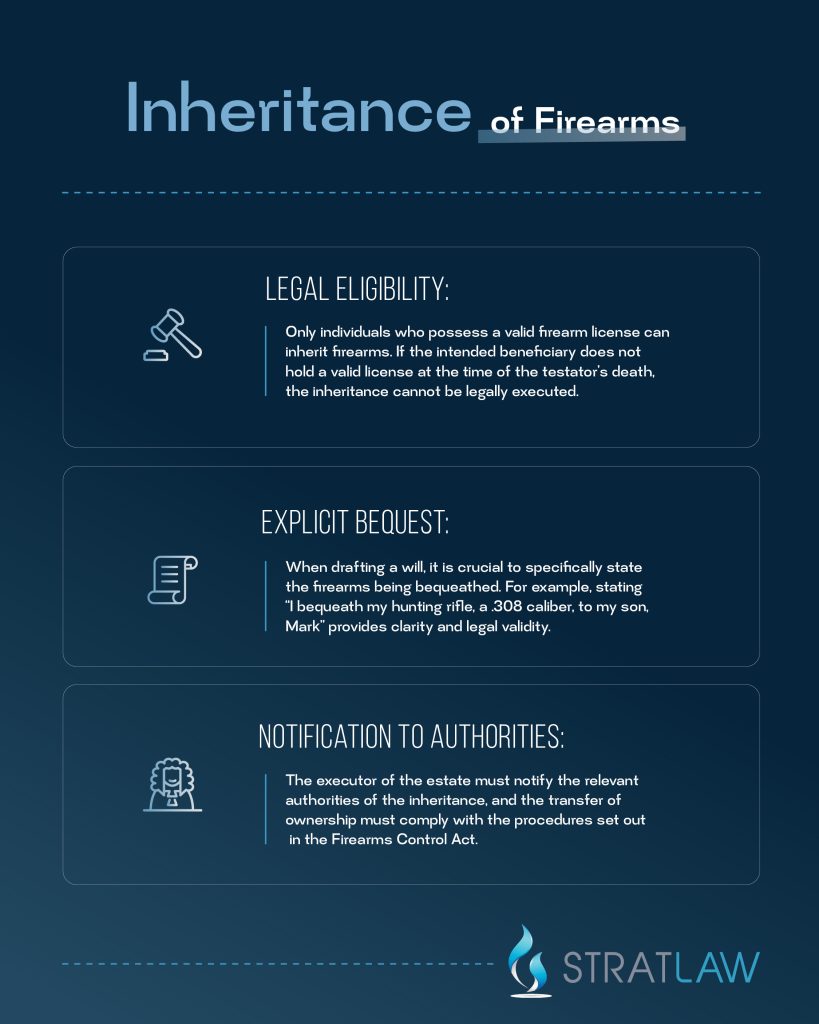
In South Africa, the inheritance of firearms is subject to strict regulations under the Firearms Control Act, 2000. Specific considerations include:
- Legal Eligibility: Only individuals who possess a valid firearm license can inherit firearms. If the intended beneficiary does not hold a valid license at the time of the testator’s death, the inheritance cannot be legally executed.
- Explicit Bequest: When drafting a will, it is crucial to specifically state the firearms being bequeathed. For example, stating “I bequeath my hunting rifle, a .308 caliber, to my son, Mark” provides clarity and legal validity.
- Notification to Authorities: The executor of the estate must notify the relevant authorities of the inheritance, and the transfer of ownership must comply with the procedures set out in the Firearms Control Act.
Legal Considerations
To ensure that specific inheritances are valid and enforceable, testators should adhere to the following legal considerations:
- Specificity: The will must clearly specify the asset and the intended beneficiary. For example, stating “I bequeath my car, a 2020 Toyota Corolla, to my daughter, Jane” or “I bequeath my hunting rifle to my son, Mark” provides clarity.
- Execution Requirements: The will must comply with the requirements set out in the Wills Act, including being in writing, signed by the testator, and witnessed by two witnesses who are not beneficiaries. Failure to meet these requirements can result in the will being declared invalid.
- Consideration of Joint Ownership: If an asset is jointly owned, the testator should consider how this affects the inheritance. Jointly owned assets typically pass directly to the surviving owner, regardless of what the will states.
- Residuary Clause: Including a residuary clause in the will ensures that any assets not specifically mentioned are still addressed. This clause directs how any remaining assets should be distributed, providing a comprehensive approach to estate planning.
Conclusion Making specific inheritances in a will is a vital aspect of estate planning in South Africa. By clearly outlining which assets are to be distributed to which beneficiaries, testators can ensure their intentions are honored and help prevent disputes among heirs. This is especially important when it comes to regulated items like firearms, where compliance with legal requirements is critical. Adhering to the legal requirements set forth in the Wills Act is essential for ensuring that these provisions are valid and enforceable. By thoughtfully considering how to designate specific inheritances, individuals can provide clarity and peace of mind for themselves and their loved ones, ensuring a smoother transition of assets after their passing.
